
Blog: An
architect
and an artist
In the cultural landscape of mid 20th-century Britain, art and architecture often worked hand in hand to shape how individuals, places and landscapes were remembered. This blog explores that relationship through the work of the painter John Langton and his subject, the distinguished architect and Governor of the Merchant Adventurers, Dr Francis Johnson. Though their practices differed—one capturing the world around them in paint, whilst the other, the built environment—they both contributed to a shared visual language of status and identity.
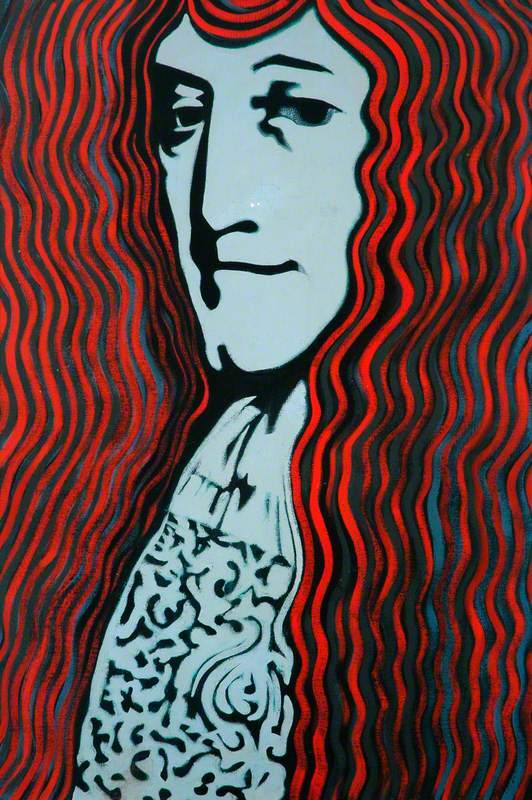
Prince Rupert Oil Sketch, 1967. University of York Art Collection, Borthwick Institute
for Archives and Research Collections.
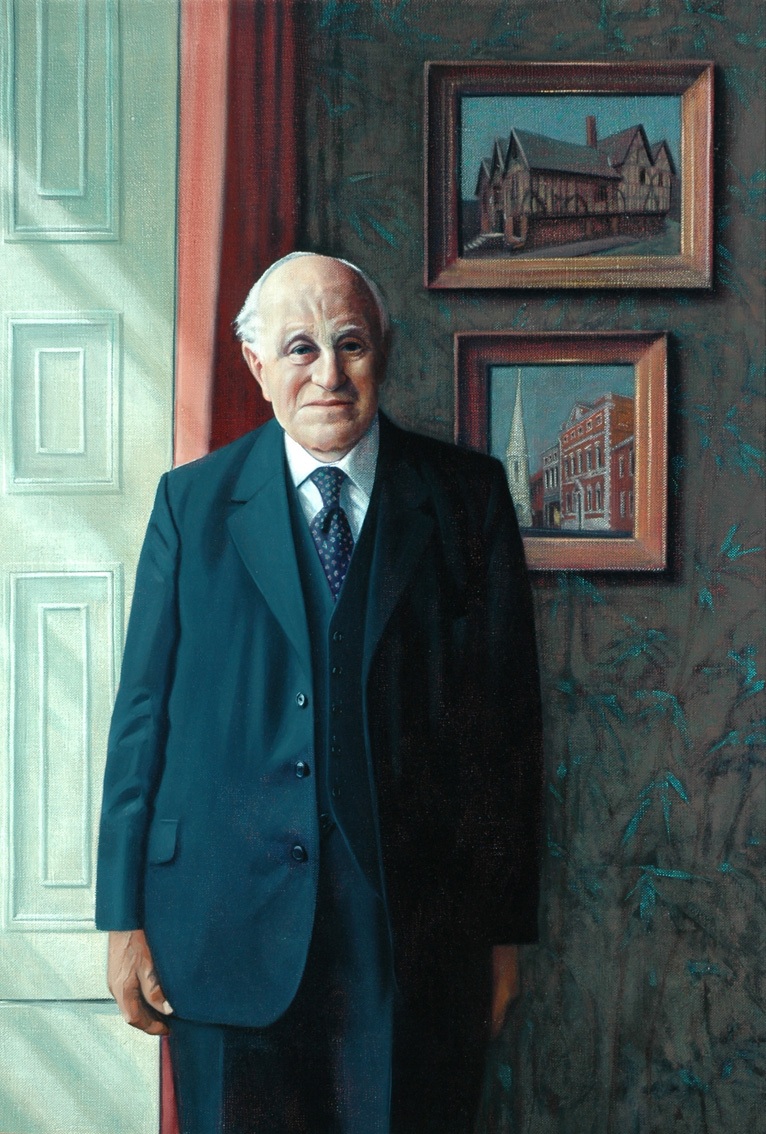
John Langton’s artistic career was marked by an exploration of style and subject. Earlier in his career, he engaged with abstraction and elements of Pop Art, experimenting boldly with colour, form, and shape. By the 1980s, his focus shifted toward more recognisable scenes—particularly parks and gardens—yet these works retained the same vivid visual language, demonstrating his continued commitment to expressive composition. This sensitivity to both structure and atmosphere makes his portrait of Francis Johnson, painted in 1994 especially compelling.
John Langton was born in York in 1932 and spent most of his life living and working in the city. He attended Nunthorpe Grammar School before enrolling at York School of Art and then Guildford School of Art. His initial career as a teacher was put to one side when his flourishing career as an artist took off in the early 1960’s. With support from mentor, Hans Hess – Curator at York Art Gallery his work became increasingly popular in Europe, particularly in Germany. He was also taking commissions from the newly founded University of York who were also purchasing his work, such as the Prince Rupert Oil Sketch, c1967 (left).
In 1995 he was given an Honorary Degree by the University of York and a major retrospective of his work along with a series of talks will take place at the University in the summer of 2026 – more details on this are below. John Langton died in 2025 leaving behind a diverse and striking body of work which can be found in collections across Europe and the UK. A selection of his work can also be viewed on ArtUK – a digital experience connecting everyone with the UK’s public art collections.
Dr Francis Johnson, like John Langton approached architecture with a similarly layered perspective. His work often looked back to the elegance and proportion of eighteenth-century design, drawing on classical influences while still embracing the needs and materials of a more modern age. This balance between tradition and innovation positioned him as both a custodian of architectural heritage and a forward-looking practitioner.
Francis Johnson was a successful architect and champion of Yorkshire’s built heritage. Born in Bridlington, East Yorkshire in 1911 he specialised in the restoration of 18th Century buildings and the design of new structures in the Classical style. He was Governor of the Merchant Adventurers in 1980 and Company architect from 1963 until his death in 1995.
Francis Johnson after training in Leeds, opened up his practice in his home town of Bridlington in 1937. His promising career was placed on hiatus by the Second World War where he served in the Royal Engineers between 1943 and 1946. In the years after the War, Classical building styles were seen as old fashioned but as the 1960’s approached, Francis Johnson’s attention to detail and methodical research put him at the forefront of Georgian building conservation and restoration.
He restored and in some cases remodelled several historic buildings including; Fairfax House in York, Hardwick Hall in Derbyshire, Belton House in Lincolnshire and Burton Agnes Hall in East Yorkshire. His meticulous research of the buildings he was working on and his concern for accuracy in materials and colours was ahead of his time. He also built several new houses and worked with the Church of England on the building of several new churches and the restoration of others including York Minster and Howden Minster.
He joined the Merchant Adventurers in 1961 and for the duration of his involvement with the Company made the restoration and preservation of the Hall a priority. He designed the wrought-iron gates to the Hall entrance in 1994. That same year he sat for John Langton, the painting highlights two buildings in framed paintings on the wall behind him; one depicting Fairfax House and the other, the Hall – highlighting his two main personal and architectural achievements.
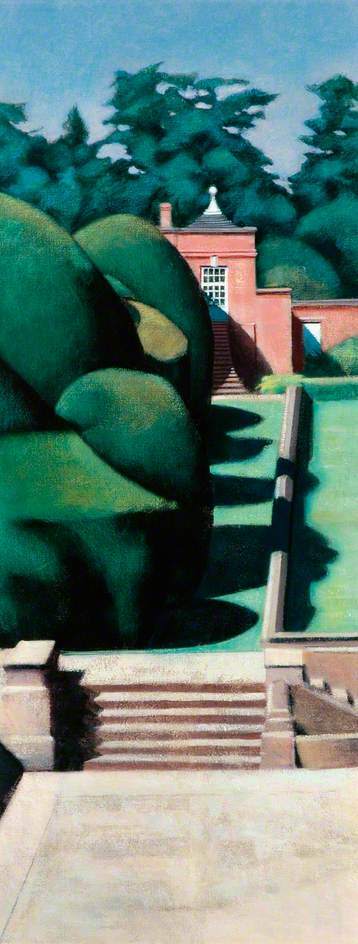
Gazebo and Topiary, 1960. University of York Art Collection, Borthwick Institute for Archives and Research Collections.
John Langton: Slow Surfacing
Celebrating modern painting in York
June – November 2026
The upcoming exhibition at Heslington Hall Gallery will be a solo show of the late John Langton (1932-2025), celebrated painter and lithographer. Langton became the University of York’s Artist Fellow in 1978, followed by an Honorary Doctorate in 1995. Langton’s national and international fame came as a result of his fellowship which he spent painting on campus.
The exhibition shows selected highlights from the various phases of his work with the aim to celebrate the modern progressive artistic style that was associated with the first decades of the university’s life and its art collecting activities. The title of the exhibition relates both to his complex method of painting as well as his gradual rise to fame through his association with the university and the cultural life at York.
The Exhibition will launch on Thursday 18th June 2026, followed by a series of Open studio talks between the University of York and the artist’s studio in Fulford on 19-21 June 2026.
John Langton: York and beyond
Saturday 6th June 2026 – 3pm to 3.40pm (Heslington Hall, Campus West)
Join Michael White, Head of History of Art at the University of York, for a talk accompanying an inspiring exhibition in the Heslington Hall gallery dedicated to the artist John Langton (1932-2025).
Michael will consider the artist’s many facets in connection to York’s recent cultural heritage, the role of the University in the cultural life of the city and alternative ways of thinking about art of recent times.